
Ranked distributor quotes
Compare supported distributor observations and retain a primary quote with ranked alternatives. Review a separate cost adoption before updating eligible same-currency, count-based unit costs.
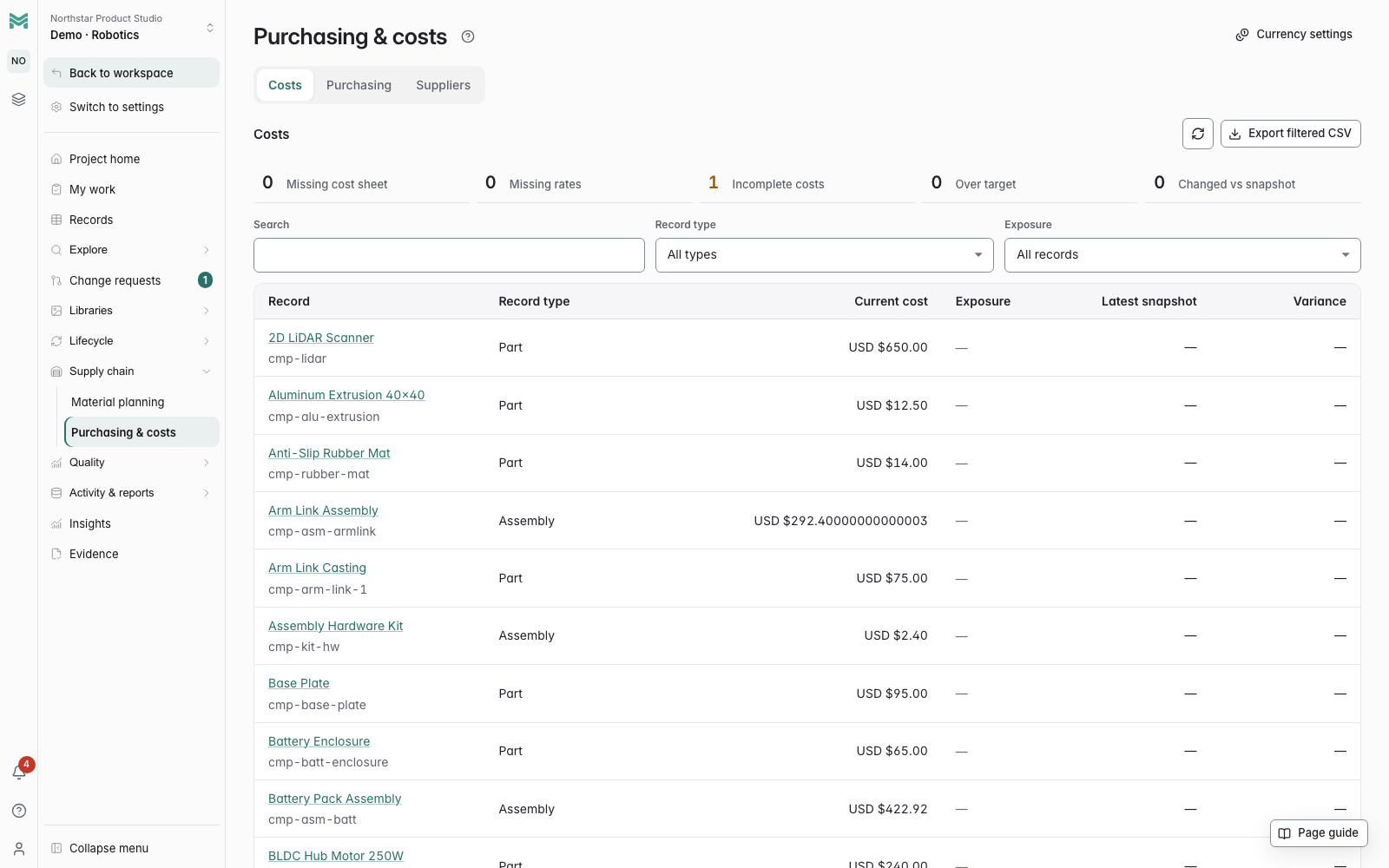
Read the workflow docsCompare supplier quotes, cost a formula batch and trace an intermediate stage into the finished product. Save the assumptions behind each decision without changing live prices.
 Click to enlarge
Compare product costs with their targets and review saved quote rounds. Keep each currency’s values together.
Read the workflow guide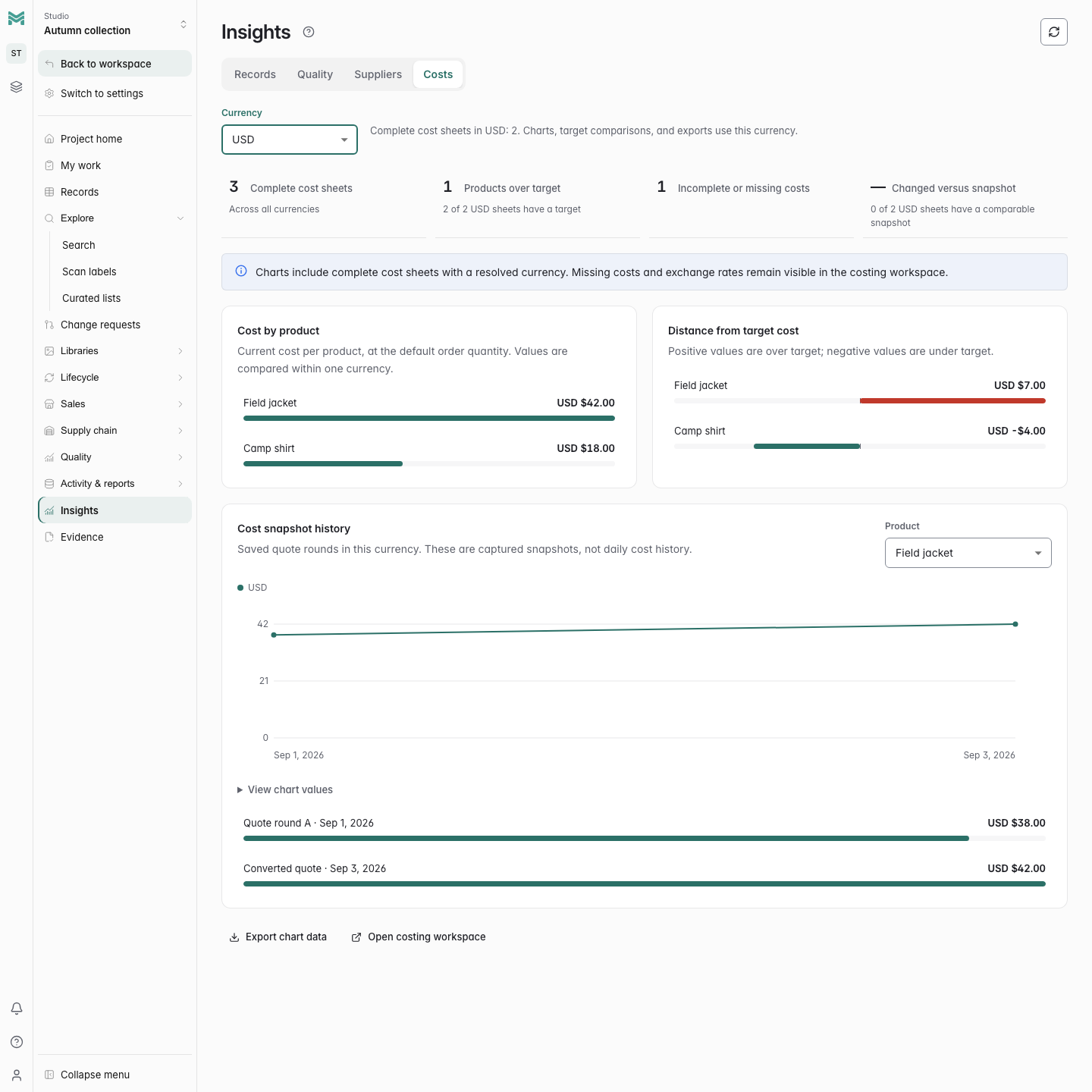 Click to enlarge
Compare supported distributor observations and retain a primary quote with ranked alternatives. Review a separate cost adoption before updating eligible same-currency, count-based unit costs.
Read the workflow docsMaintain approved sources for purchased parts with retained review history. Optionally warn or block configured lifecycle transitions when the primary selected source lacks a qualifying retained price.
Read the workflow docsA configurable sheet per item: material, labour, overhead and the lines you add yourself. It reads the bill of materials rather than asking you to retype it.
Compare a batch baseline with price and yield assumptions, assign each output its share of landed cost, and save a named evaluation. History and CSV export retain the batch basis, yields, ingredient contributions and allocations.
Read the workflow docsUse a matching output from a reviewed, fully costed upstream batch as a downstream scenario price, including configured nested intermediates. Carry its allocated cost through compatible units, quantities and waste. Changed sources require a deliberate refresh and another preview.
Read the workflow docsChoose proportional consumption or whole production lots for configured intermediate stages. Whole-lot estimates aggregate demand before rounding up, charge each lot's reviewed allocation and retain produced and unused quantities with the saved comparison.
Read the workflow docsSelect a current production mapping in a cost scenario. Compare costs using its reviewed production composition and retain the approval receipt with the saved evaluation. Later BOM changes leave historical evidence intact and require a fresh approval for new use.
Read the workflow docsCompare goods, freight, tooling and other one-time charges at the requested quantity. Unknown charges stay explicit, complete totals can be ranked, and the cost breakdown is preserved with the award without inflating recurring source prices.
Read the workflow docsApprove suppliers for a part, part type or all sourcing. Preserve review history and evidence references, track expiry, and record explicit exceptions with a frozen qualification assessment when awarding an RFQ.
Read the workflow docsReview material, process, tooling and site changes against frozen affected-item snapshots. Assign evidence-backed requirements, record independent decisions, and track implementation separately from approval, through the app, REST or MCP.
Read the workflow docsCalculate component costs from compatible consumption quantities, units and cost bases. Review wastage and the assembly’s own contribution alongside missing prices or unresolved inputs.
Read the workflow docsCost the material you consume, not the material that ends up in the product. Wastage is applied per line, where the loss actually happens.
Apply markup at the level you sell at and read the margin against the rolled-up cost underneath it.
Carry a cost from ex-works through freight, duty and the rest to a landed figure, with every step visible instead of buried in one adjusted number.
Hold each cost in the currency it was quoted in and convert at read time. The quote keeps its original figure; the sheet still totals.
Freeze a costing into a labelled snapshot and compare snapshots against each other. Answering "what did this cost us in March" stops being an archaeology exercise.
Explore connected product work through actual ManyRows screens and example data.
Connect size-specific BOMs, shared parts, supplier lots and physical pilot builds.
Machine BOMs, prototype corrections, and pilot builds.
Model variants, sample tests, and pilot production.
Material costs, artwork revisions, and print proofs.
Materials, finishes, BOMs and maker samples.
Work through graded charts, sample comparisons, supplier follow-up and order size allocations.
Connect material BOMs, graded fit specifications and saved physical sample reviews.
Review linked certificate dates, exact-revision BOM coverage and 30/60/90-day renewal windows.
Review recipes, batch yields, nutrition estimates, allergen evidence and label decisions.
Connect formula costs and packaging to observed outcomes, retained failures and fresh retests.
Review alternates and lifecycle findings, then trace the affected product BOMs and certificate evidence.
Follow formula batches into physical lots, consumed inputs, quality holds and inspected internal release.
Connect supplier sample decisions, planned quantities and selling prices to retained channel content.
Start with your product model, connect the records, and bring your team into the same workflow.