Product lifecycle management · Agent-ready API

AI agent-ready PLM
Your product data, your way.

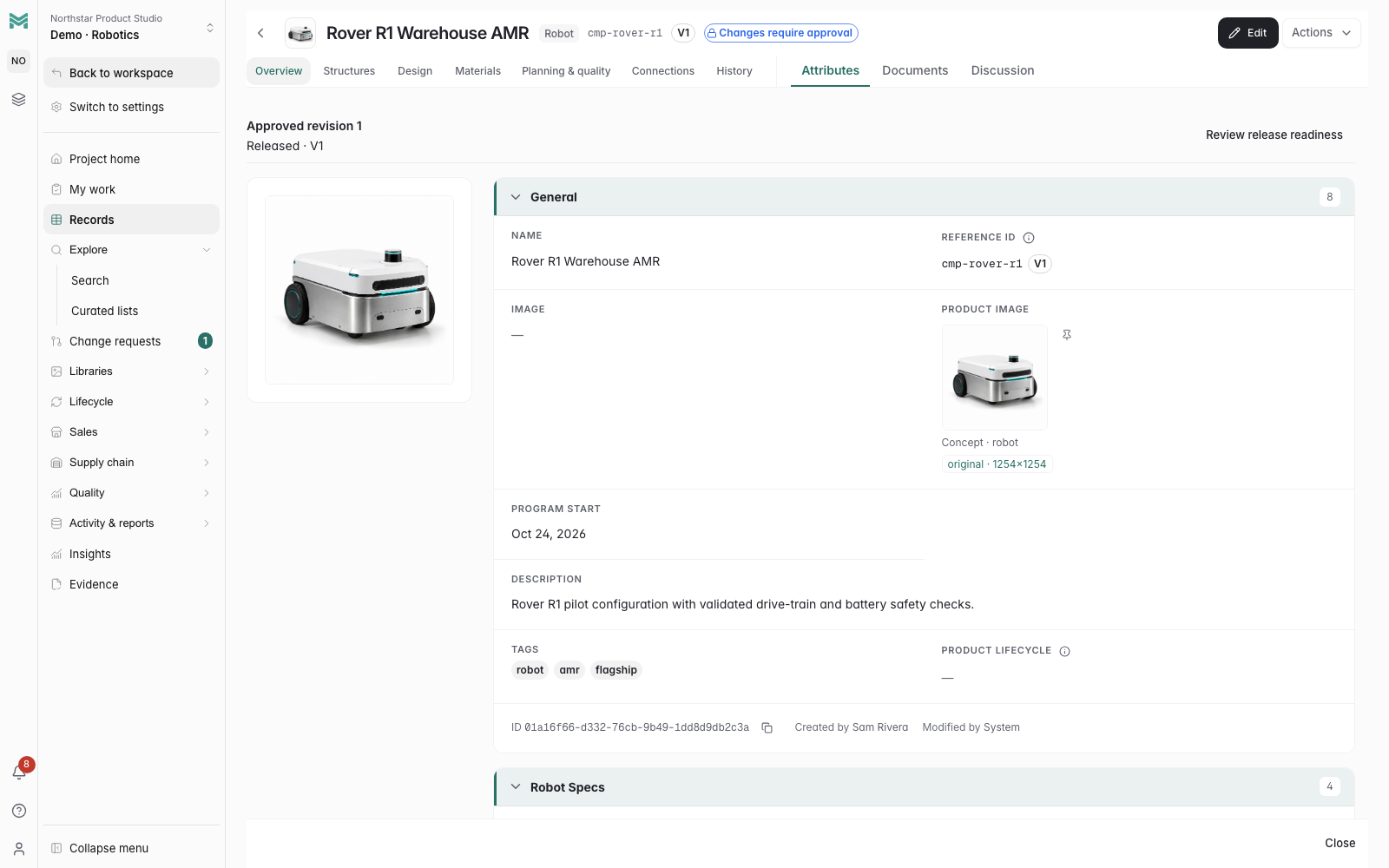
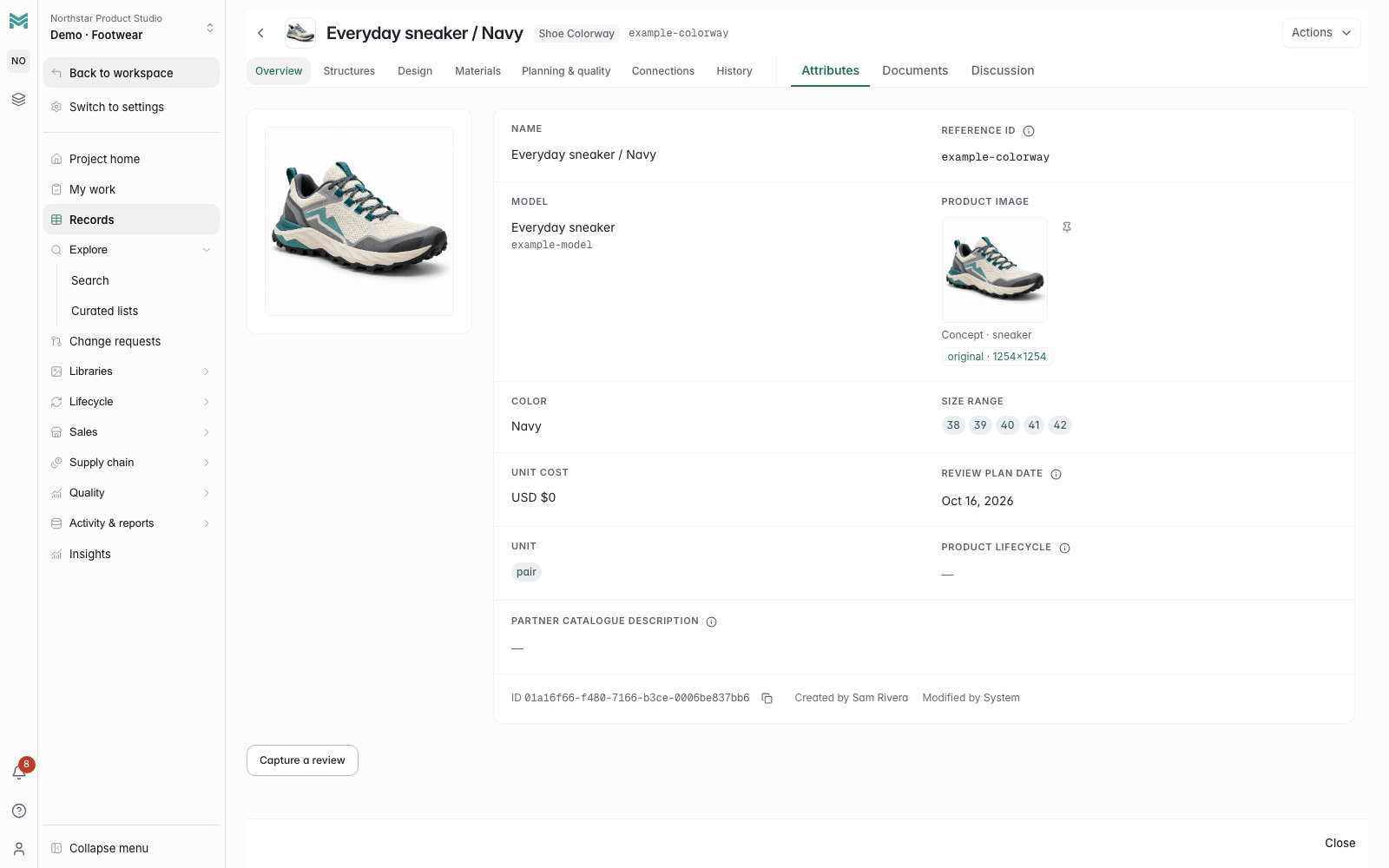
Product lifecycle management (PLM) that bends to your products, so you can design and launch faster. Model your parts, products, formulas, and BOMs the way they really are, keep one source of truth instead of brittle spreadsheets and rigid PLM tools, then work in a fast grid or let AI agents discover your schema and safely do the data work through the API.

Cloud-hosted, nothing to run. Free plan, no card.

The ManyRows data grid: typed records with filters, sorting, and status fields
Class PLM platform
Data model Strongly typed
Structures Multi-level, optional
Change control Opt-in per type
Access Grid + agent-ready API
Why ManyRows
Is your PLM actually getting products out the door?

ManyRows standardizes the data and the processes behind innovating, developing and commercializing products, so your best ideas reach the market instead of stalling.

01
Nobody knows which file is current Six spreadsheets, three of them edited last week, and the factory has a fourth.
02
Approvals live in email A change is agreed in a thread, and a month later nobody can say who signed it off.
03
The tool that fixes it wants a quarter An implementation project and a six-figure quote before anyone models a single part.
[01] Product data model

Any shape,
one spine.

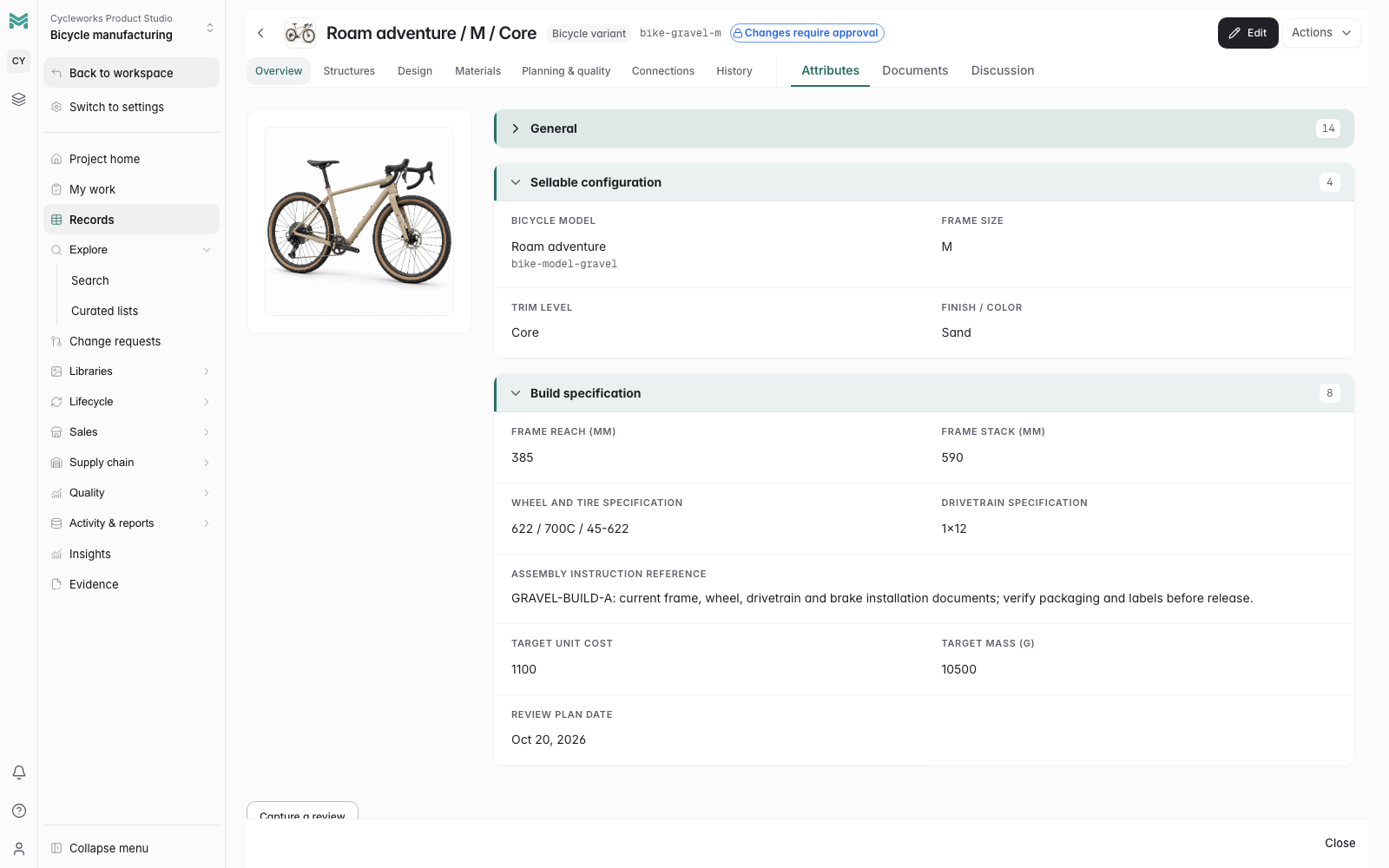
Group types under a base type to share a common spine of fields, then give each type whatever else it needs. A Part, a Formula, a Finished Good: each its own shape, all inheriting the shared and built-in fields, and never losing sort or search across them.

  • Polymorphic entity types & item shapes
  • Shared fields, define once, inherited everywhere
  • Field groups keep each type organised
  • Built-in fields on every type: id, name, timestamps

Strongly typed fields

textlongtextrichtextintegerdecimalmoneypercentdatedatetimebooleanurlemailphonecolorcountryimagefileselectmultiselectentitycollectionlookupreverseuuid
One shared field, inherited by every type that claims it
ManyRows shared fields, one field inherited by several entity types
[02] Structures

The multi-level bill of materials.

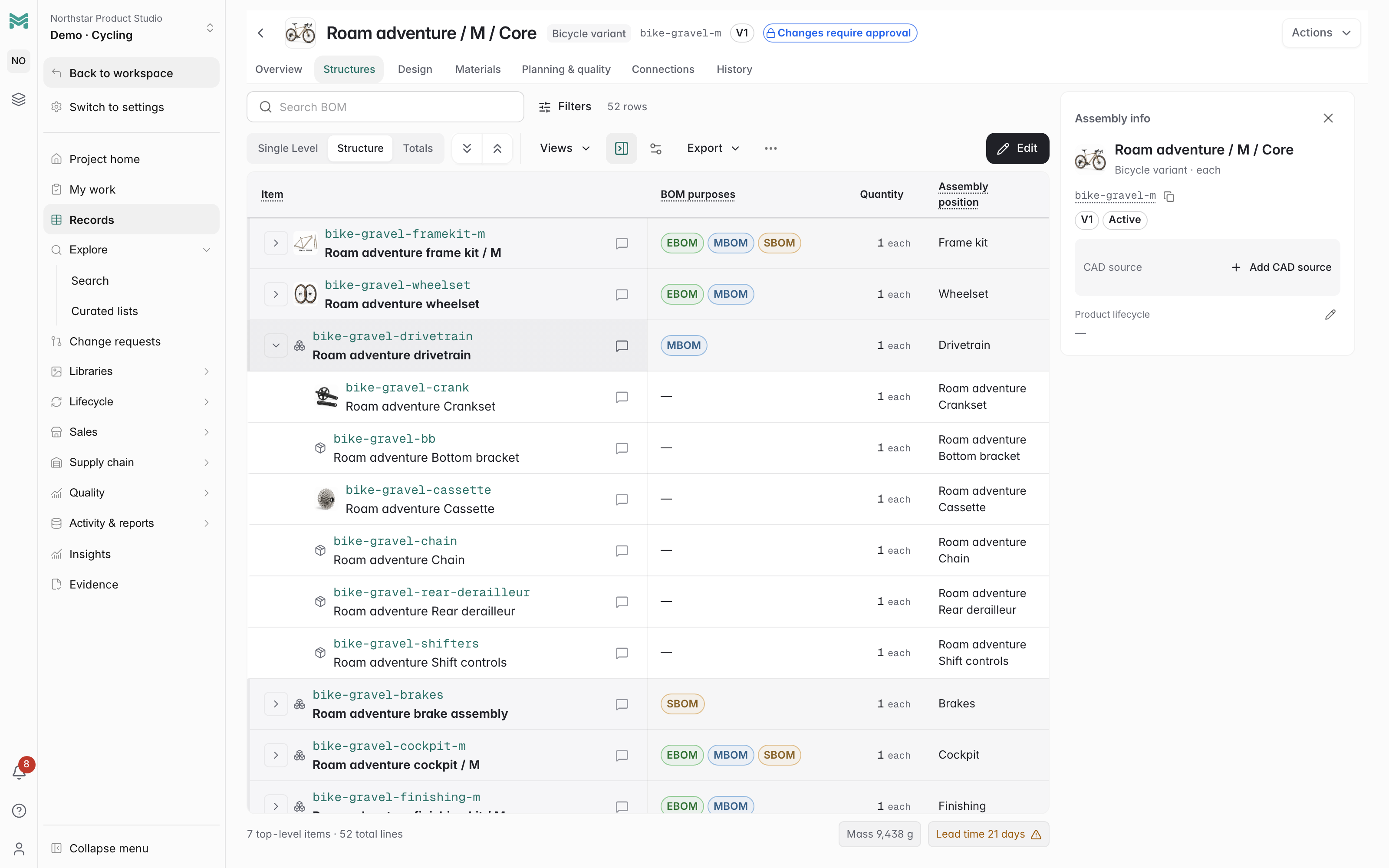
What goes into what. Some things are built out of other things, and those get a proper structure you can open level by level, add costs and lead times all the way up, hold against a frozen version to see what moved, and read backwards from a single bolt to every product it ends up in. Anything that isn’t an assembly never grows a parts list at all.

Part no. Description Rev Qty
FG-1042 Trail Bike, 29in, Frame M C 1
AS-2201 Fork Assembly, 140mm B 1
PT-3310 Stanchion, 34mm A 2
PT-3311 Crown, forged alloy A 1
PT-3318 Damper cartridge D 1
AS-2207 Wheelset, 29in A 1
PT-3402 Rim, 29 x 30mm B 2
PT-3407 Spoke, 292mm A 64
PT-3411 Hub, 12 x 148 boost C 2
AS-2215 Drivetrain group, 12sp A 1
PT-3520 Crankset, 170mm A 1
PT-3524 Chain, 12-speed B 1
PT-3601 Frame, 6061 alloy, M E 1

13 lines across 3 levels. Open any branch to go deeper, or start from one bolt and see every product it ends up in.

[03] Side-by-side compare

Compare anything, field by field.

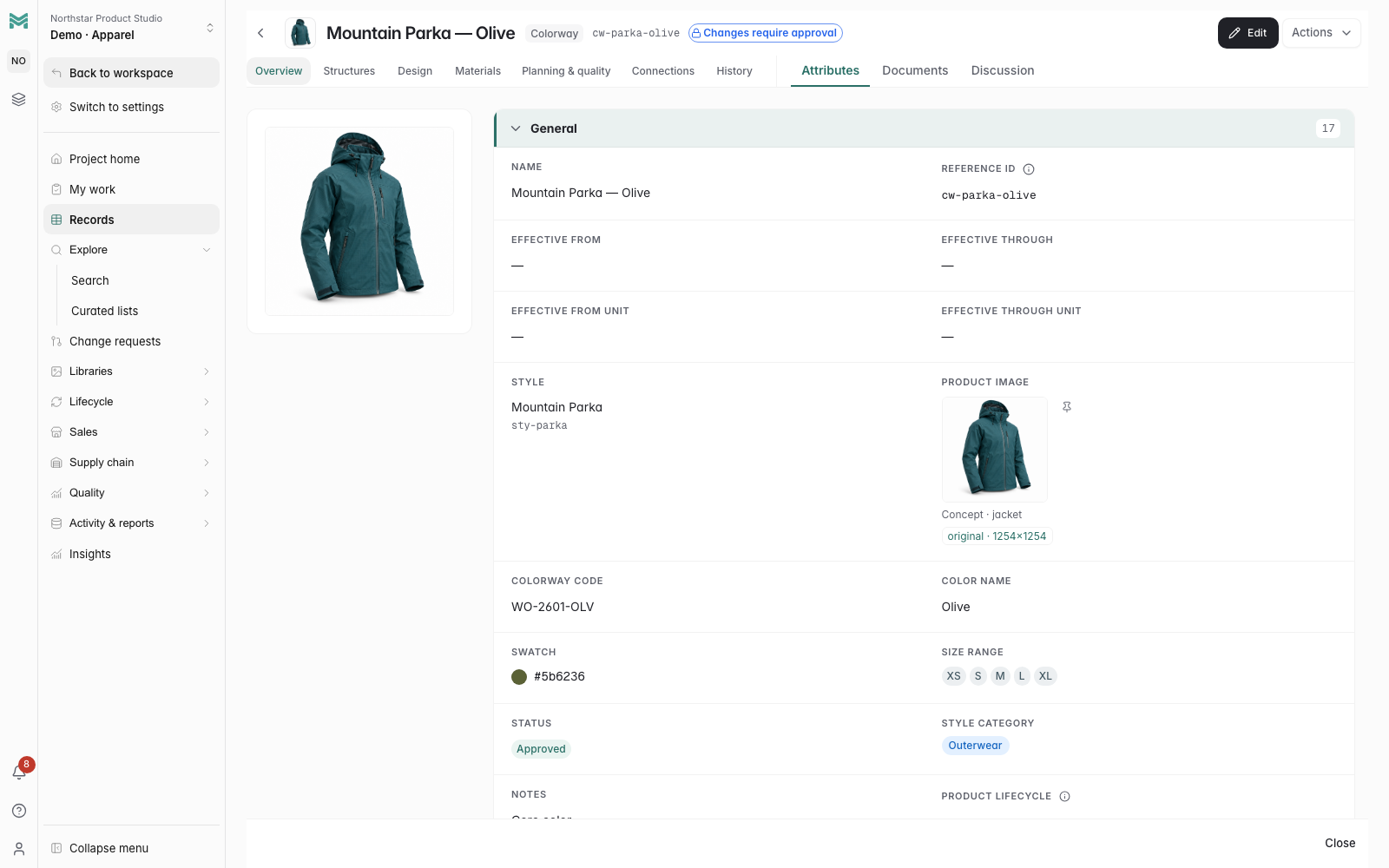
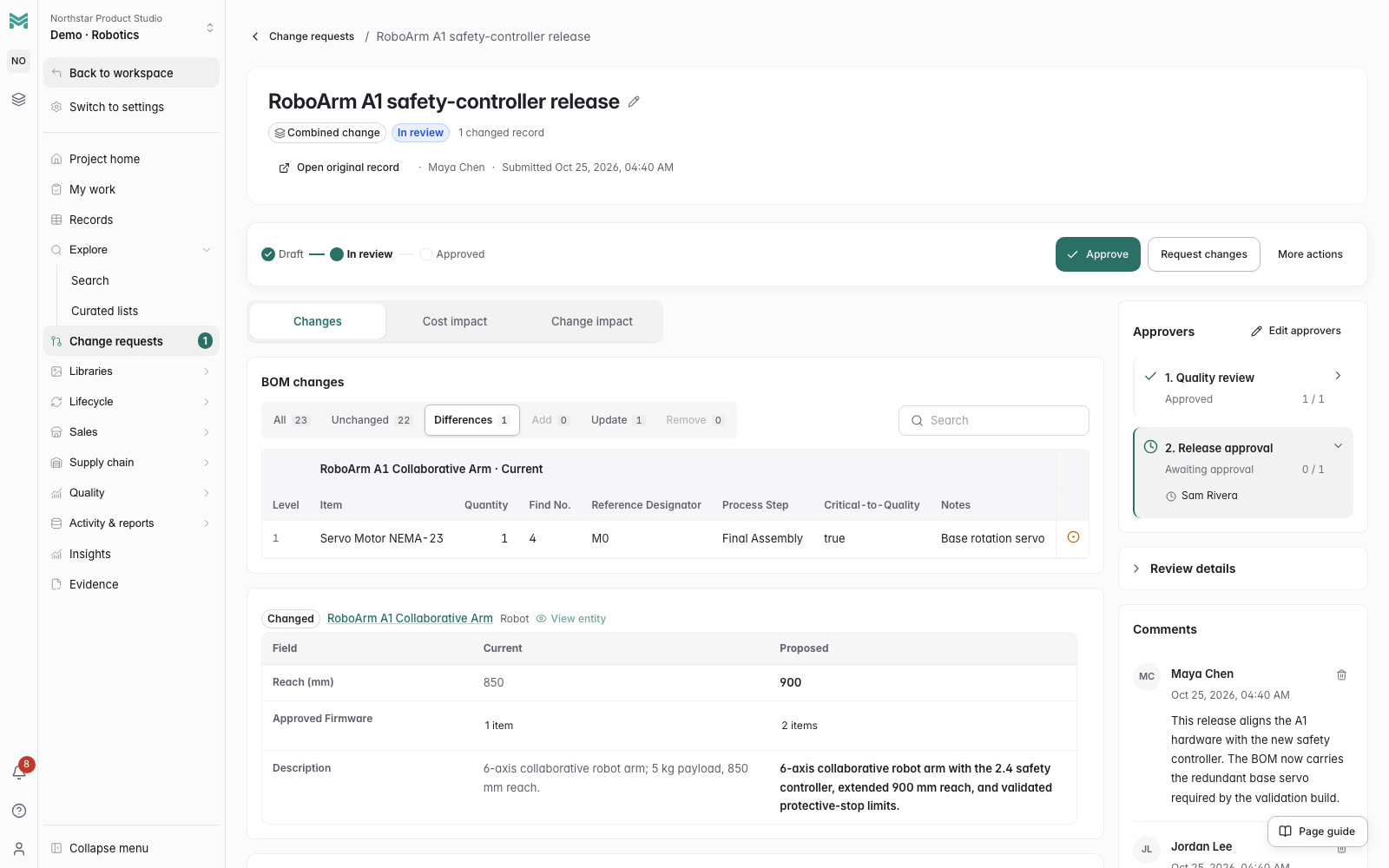
Put two records next to each other and surface exactly what differs. Flip on a differences-only view to reconcile variants and suppliers, or to review a change before it ships.

  • Side-by-side product comparison
  • Differences-only view
  • BOM diff & frozen structure baselines
  • Works across any entity type
Two records side by side, with only the differences marked
ManyRows side-by-side product comparison highlighting differences
[04] A grid that knows your types

An admin grid
that gets it.

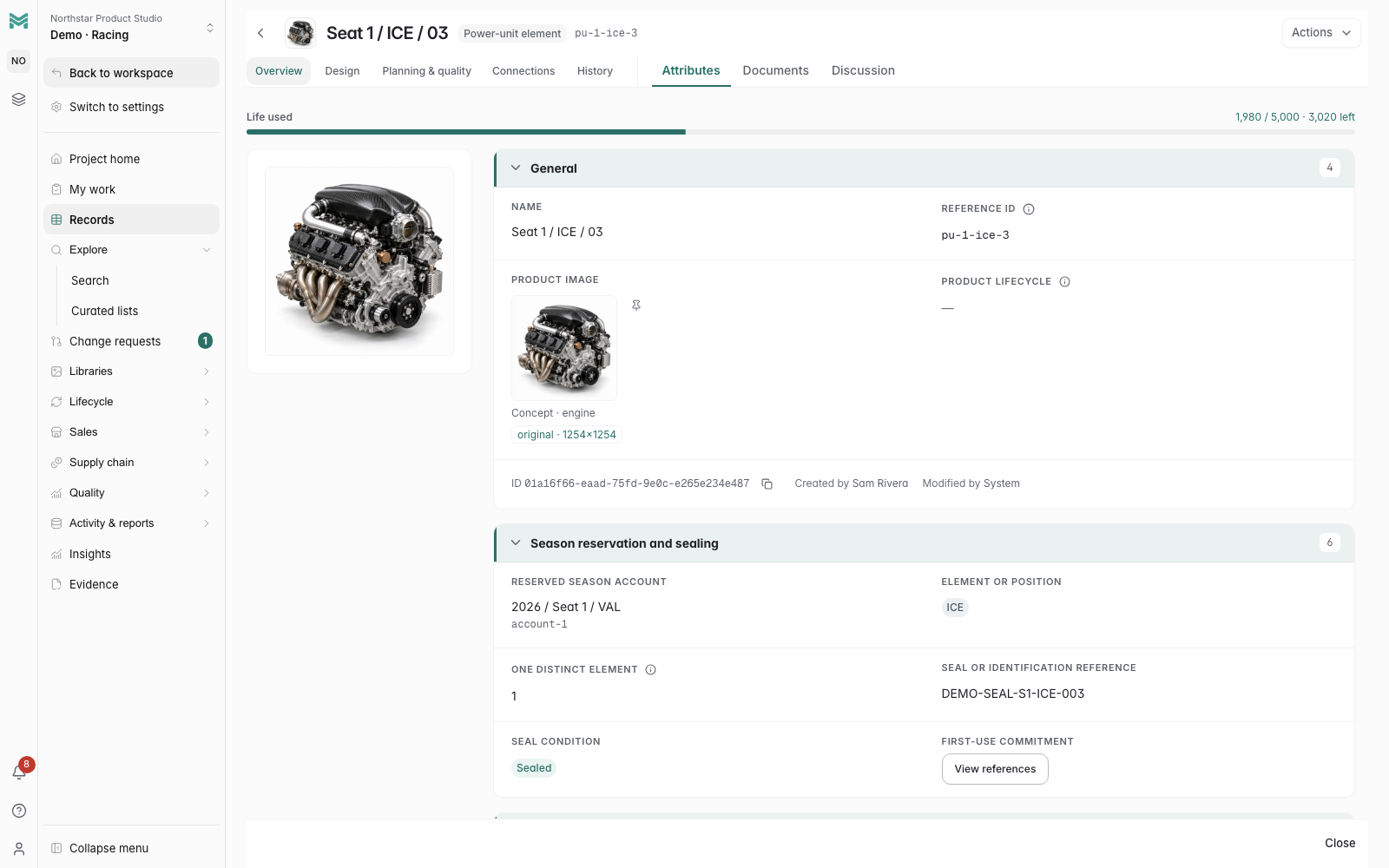
Edit inline, filter, sort, and save views. The grid respects every field type (money, dates, references, images) and remembers how you like to work. Product data management without a training course.

  • Inline cell editing, faceted filters & sort
  • Saved views per type, with filter-scoped totals
  • Bulk edit & project-wide search
  • Reference pickers & image thumbnails

Put AI agents to work

Connect any tool-using agent through hosted MCP with a scoped key—no custom integration layer required. Explicitly authorize it to build and safely evolve your schema, then let it validate and update records and BOMs, run quality and planning work, and submit governed changes for human approval.

The grid: filter, sort and edit records in place
The ManyRows data grid, records with filters, sorting, and inline editing
Product lifecycle management

PLM, end to end.

Centralize product data, structures, and attributes, route the work through your teams, and launch with traceability, all on one typed platform.

One home for every product

Model parts, products, structures, and attributes on one typed spine, with lifecycle status built in, not scattered across spreadsheets.

Create, configure, approve

Stand up new products and items, shape their attributes field by field, and route changes through change requests (staged working copies, named approvers, atomic apply), with every revision kept.

One record every team reads

Design, supply chain, manufacturing, and quality all work from the same source of truth, over a fast grid or the API.

Let agents do the busywork

Agents can build and safely evolve the schema with a dedicated permission, discover API limits at runtime, validate work in batches, and drive repetitive data entry and governed workflows while people keep approval control.

Release with control

Freeze an exact product configuration, decide when it takes effect, and run the rollout with owners, prerequisites, readiness checks and evidence. See drift before you call the launch complete.

Plan, cost, and check

Size specs with grading, Time & Action calendars with milestone tracking, costing sheets with frozen snapshots, and quality checks with dispositions. The PLM toolkit is built in, not bolted on.

Use cases

Built for the product lifecycle.

From a first idea to a shipping product, ManyRows covers the work in between.

Connect your whole product story

Model parts, products, formulas, suppliers, and changes on one typed data model, from a first idea to a shipping product, so every team works from the same source of truth instead of scattered files.

One product record, across every tool

Give each item a stable reference and a shared spine of fields, then read and write it from any app over the API. One product record, not copies drifting apart across systems.

Get from idea to launch faster

Stand up a new product type in minutes, not a quarter. Capture new products, track engineering changes, and reshape the model as the product evolves.

Build quality in, with full traceability

See where every component is used, trace a lot’s recall impact through its genealogy, compare two records field by field, and read a full audit log of who changed what. Catch problems before they ship.

Give your AI agents real tools

Connect any tool-using agent through hosted MCP with a scoped key, or generate tools from OpenAPI. Give it explicit schema access to build the model, then let it update records, author BOMs, run quality and planning work, and propose governed changes.

Everything in the model.

A schema you can group and share, over twenty field types, BOMs with real governance, a full PLM toolkit, a grid to drive it, and an API over all of it. One product, one workspace.

Model 8
Entity types
Base types
Shared fields
Field groups
Polymorphic shapes
Part-number schemes
Field defaults
Catalogs & categories
Structures 8
Multi-level BOM
Formulas & co-products
Where-used
Approved alternates
Substitution
BOM diff & baselines
Product compare
Rollups & explosion
Governance 8
Change requests
Approver rosters
Immutable revisions
Effectivity dating
Change locks
Obsolescence
Audit log
Release control & rollouts
PLM toolkit 8
Size specs & grading
Time & Action plans
Costing & snapshots
Material requirements
Quality checks & lab dips
Compliance certificates
Lot genealogy & recall
Print dossiers
Data & platform 8
Grid with inline editing
Faceted filters & saved views
Search across types
Bulk edit & CSV import
AI-agent workflows
OpenAPI & scoped API keys
Workspaces & team roles
Image & file libraries

Your data stays yours.

Who can see it, what happened to it, and how you get it back out. The three questions worth asking any product data platform, answered before you have to ask them.

People only see their own project Four roles, granted per project rather than across the whole account. A contractor can be given one product line and nothing else.
You can always see who changed what Every edit is recorded with the person and the time, on records and on the setup itself. Filter it by day, by person, or by what they did.
History cannot be rewritten Once a change is approved it becomes a numbered revision with the reason attached. Nothing in the product can go back and edit it.
Deleting is not final Draft, archived and deleted are separate states. Deleted records stay recoverable for 30 days before anything actually goes.
Your data leaves whole Take the whole project with you: the setup, the records, everything, in a file that imports somewhere else. No support ticket required.
Nothing to install It runs in the browser and we run the servers. No plugin on every desktop, no annual upgrade project.

Before you start.

The questions that come up in the first ten minutes, answered here instead of on a call.

Do we have to move everything at once?
No. Start with one product line, or one kind of record, and leave the rest where it is. Types are added one at a time as you need them, so there is no big-bang migration and no cut-over weekend.
Can we bring our existing spreadsheets?
Yes. Map columns to fields in the browser, preview what will happen, and upload in chunks that update matching records instead of duplicating them. There is an AI route too: export a spec of your schema, have any model generate the rows, and import them straight back.
Does everything need a BOM and an approval step?
No, and that is deliberate. Structures and change control are switched on per entity type. A materials catalogue can stay a plain list while a finished product carries a multi-level BOM and routes every edit through a change request.
Is there an API?
Yes. Connect an AI agent to hosted MCP with a scoped API key, or generate tools from the public OpenAPI contract. With explicit permission it can build and safely evolve the schema, then manage records, BOMs, categories, quality checks, planning milestones, and governed change proposals without manual dashboard entry. Read the API docs
How do we give a supplier or a contractor access?
For a handoff, send a frozen, expiring record link with only the fields, images, measurements and BOM sections they need. It opens without an account, can carry a recipient mark and passphrase, and can be revoked at any time. For ongoing work, roles are granted per project rather than across the whole account. See sharing and access controls
What happens if two people edit the same record?
The second save is refused rather than quietly overwriting the first. Where a type is under change control, edits collect in a working copy with its own approvals and land in one act, so a change cannot be half-applied between two people.
Start free

Get started with ManyRows.

Create a workspace and start modelling your product data in minutes.

Start free Take the tour Talk to us

or email [email protected]