
[01]
Identity is core infrastructure. Treat it that way.
Sessions, recovery emails, audit trail, some of the most sensitive data you hold. ManyRows Auth keeps it in plain Postgres you can query, back up, and build on.
Self-hosted auth, roles, feature flags, and runtime config. One binary. Your database. Your domain. Open source, free at any scale.
The React SDK gives you useUser(), a pre-built profile dialog, a sign-in component, and live feature flags from the same provider. Server-side, every SDK speaks the same REST.
@manyrows/appkit-react react · npm github.com/manyrows/manyrows-go go · published github.com/manyrows/manyrows-node node · source github.com/manyrows/manyrows-python python · source com.manyrows:manyrows-java java · source 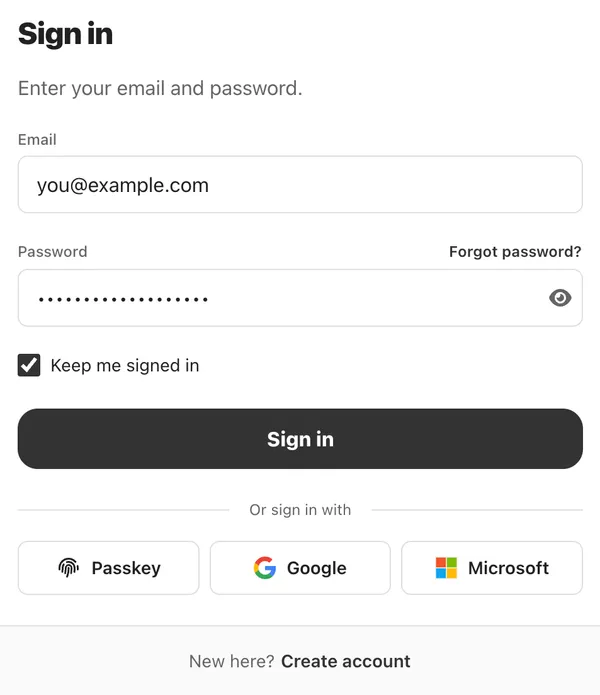
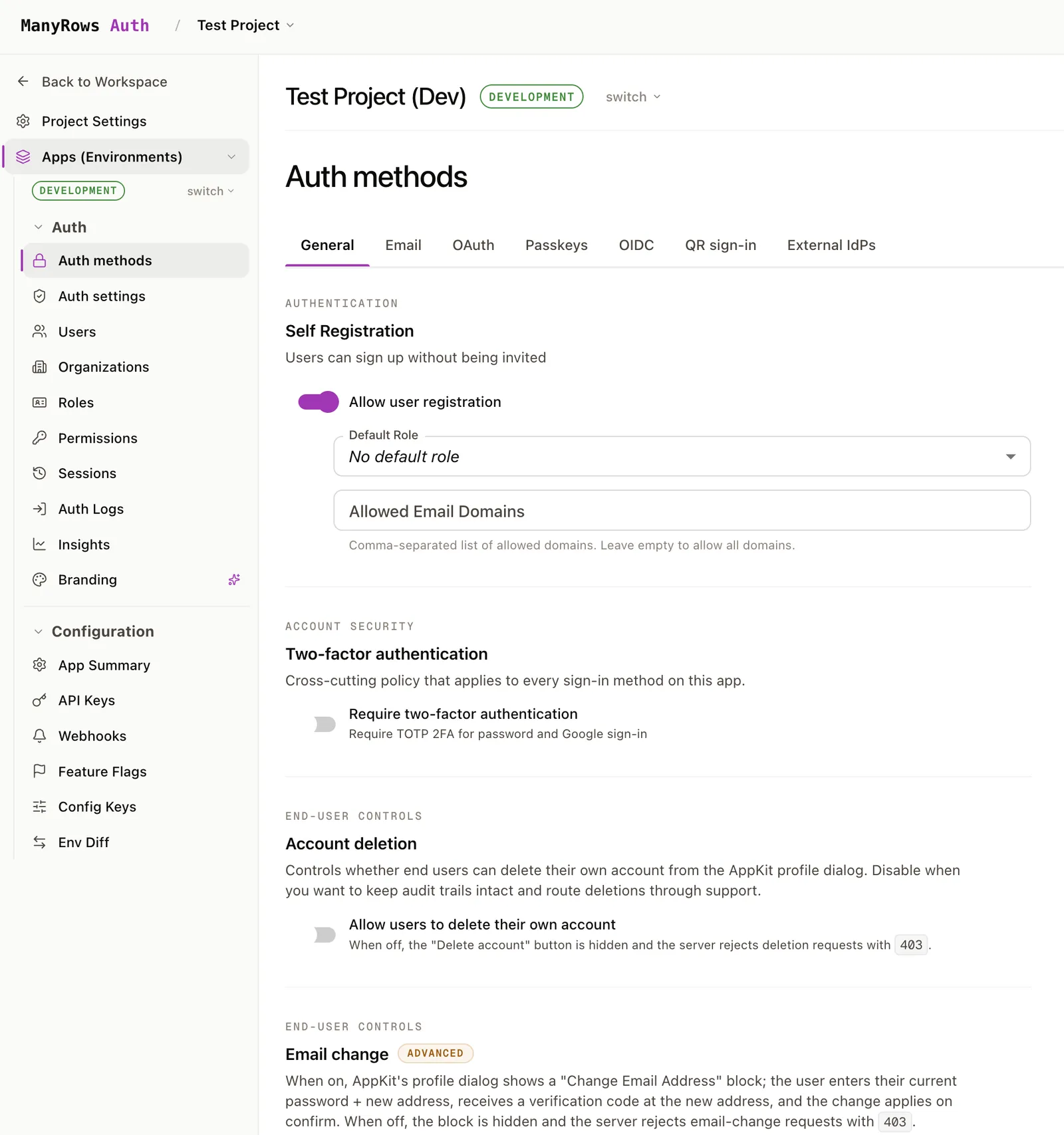
Auth, identity, authorization, developer tools, ops. Same binary, same admin UI, same SQL database. No tiers.
Sessions, recovery emails, audit trail, some of the most sensitive data you hold. ManyRows Auth keeps it in plain Postgres you can query, back up, and build on.
The software is free at any scale. Self-host it and your only bill is the hardware it runs on. A signup spike never turns into a surprise invoice.
Open source. Plain SQL migrations. Documented data model. Audit it, patch it, fork it.
One repo, one compose file, one Postgres. The binary embeds its own admin UI; schema, migrations, secrets, and the first admin user all bootstrap themselves.